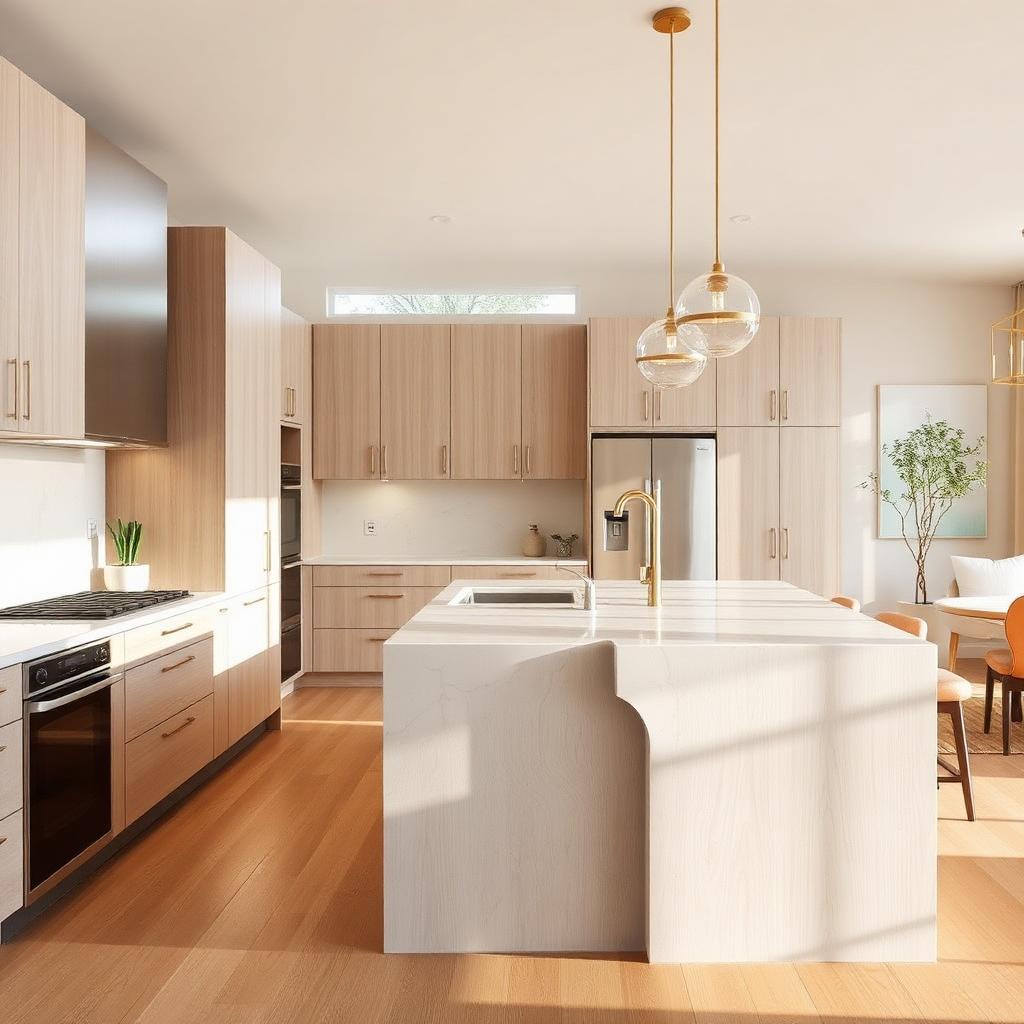
Before you can budget a kitchen renovation, you need to know what kind of kitchen you actually want. Most Ottawa homeowners we meet land in one of three buckets: modern, transitional, or traditional. The labels get used loosely online, so here's how we use them on real Ottawa jobs — with the cabinetry, counters, and hardware that define each one.
The three styles, side by side
| Style | Cabinets | Counters | Hardware | Best fit |
|---|---|---|---|---|
| Modern | Flat-panel, handleless or slab | Quartz, large-format porcelain | Push-to-open, integrated pulls | New builds, infills, condos |
| Transitional | Shaker, simple raised-panel | Quartz, honed quartzite | Matte black or brushed brass bar pulls | Most Ottawa suburban homes |
| Traditional | Raised-panel, beaded inset, glass uppers | Honed marble, soapstone, granite | Cup pulls, antique brass knobs | Glebe, Rockcliffe, century homes |
1. Modern — clean lines, no ornament
Modern kitchens lean on flat-panel doors (often in matte lacquer, woodgrain melamine, or thermofoil), handleless or push-to-open cabinetry, and large uninterrupted runs of counter. Colour palettes are tight — usually two finishes plus an accent. Appliances are panel-ready and integrated when budget allows.
Where it fits best in Ottawa: new builds in Wateridge, Greystone, and Kanata Lakes; downtown infills; and condos in LeBreton Flats and the ByWard. It works less well in century homes where the existing trim, baseboards, and door casings fight the cabinetry's lack of detail.
2. Transitional — the Ottawa default, for good reason
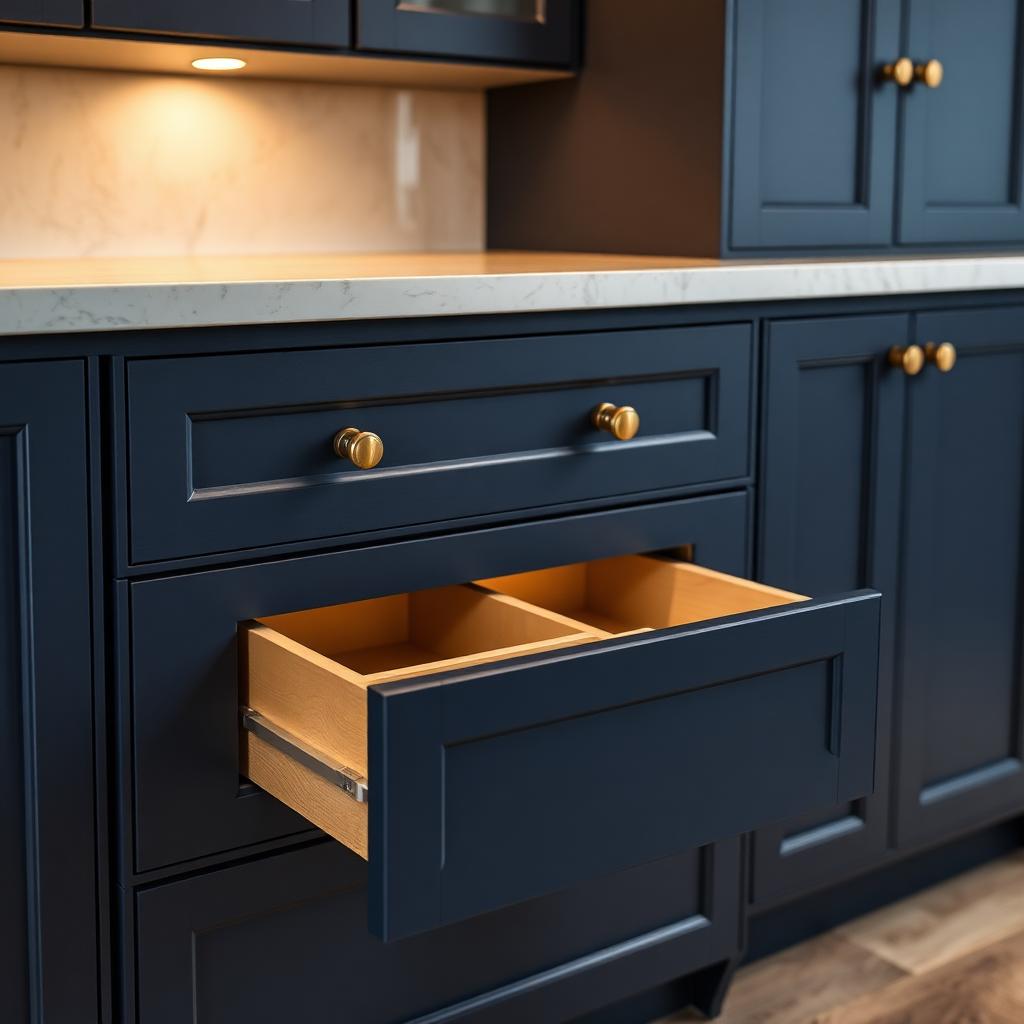
Transitional is the style we build the most. Shaker doors, a quartz counter, a simple subway or large-format tile backsplash, and a single statement — a range hood, a coloured island, a brass faucet. It reads classic enough to age well and clean enough to feel current.
Why it dominates Ottawa: it matches the trim and millwork already in most Barrhaven, Kanata, Orléans, and Nepean homes built since the 1990s, and it doesn't lock you into a specific decade.
3. Traditional — detail, depth, and warmth
Traditional kitchens use raised-panel or beaded-inset doors, crown moulding tied into the ceiling, decorative corbels, and furniture-style islands. Counters are often honed (not polished) for a softer look. Hardware is cup pulls and knobs in antique brass, oil-rubbed bronze, or polished nickel.
Where it shines: Glebe and Old Ottawa South century homes, Rockcliffe and Manor Park infills designed to match the neighbourhood, and any renovation where the rest of the house is heavily detailed. It's the most labour-intensive of the three to build well — inset doors in particular require precise cabinet boxes.
What each style typically costs in Ottawa (2026)
| Style | Mid-range full kitchen | High-end full kitchen |
|---|---|---|
| Modern | $45,000 – $70,000 | $70,000 – $120,000+ |
| Transitional | $40,000 – $65,000 | $65,000 – $100,000 |
| Traditional | $50,000 – $80,000 | $80,000 – $140,000+ |
Modern and traditional both carry a premium — modern for the precision of slab doors and integrated hardware, traditional for the door styles and millwork labour. Transitional sits in the middle because shaker doors are produced at scale by every major North American cabinet manufacturer.
How we use this on a consult
- We walk your home before we talk cabinets — the existing trim, floor, and adjacent rooms drive the recommendation.
- We show samples of all three door profiles in your actual lighting.
- We sketch the layout in 3D before quoting, so you see the style on your walls, not in a magazine.
- Your final fixed-price quote names the exact door, counter, and hardware lines — no "or equivalent."
Next step
Book a free in-home consult and we'll bring physical samples of all three styles, photos of recent Ottawa projects in each, and an honest read on which one fits your home and budget best.
- What's the most popular kitchen style in Ottawa right now?
- Transitional — specifically shaker doors in white, soft grey, or a deep green/navy island, paired with quartz counters and matte black or brushed brass hardware. It accounts for the majority of full kitchen renovations we build across Ottawa.
- Is a modern kitchen more expensive than a traditional one?
- Usually slightly less, but the gap is smaller than people expect. Modern slab doors and integrated hardware carry a precision premium, while traditional raised-panel and inset doors carry a labour and detail premium. Transitional shaker kitchens are typically the most cost-effective of the three.
- Will a modern kitchen look out of place in my older Ottawa home?
- It can — especially in homes with heavy original trim and millwork. The fix is usually a transitional design that borrows the cleanest elements of modern (handleless drawers, quartz counters) but keeps a shaker door profile that respects the rest of the house.
- How long does it take to choose a kitchen style?
- Most clients decide within one consult when they can see physical door samples in their own kitchen lighting. We bring all three styles to the first meeting so you can compare side by side instead of scrolling photos.

Aus N.
Co-Owner, Ottawa Property Experts
Aus N. co-founded Ottawa Property Experts with Emad H. He's on every project the company takes on, and writes about kitchens and bathrooms the same way he runs jobs: practical, specific, and with the numbers shown.